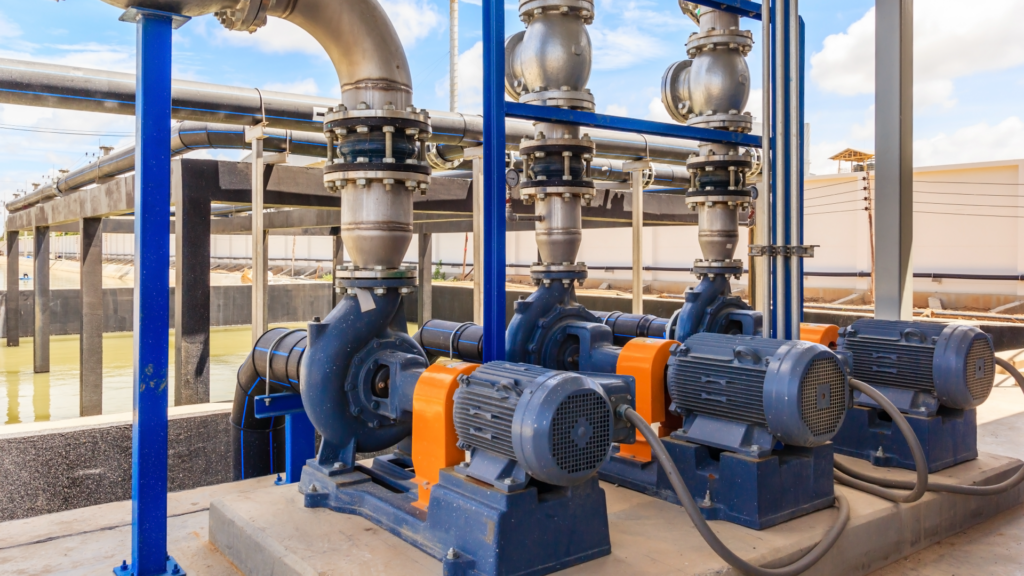
Collecting vibration data is relatively easy. Understanding what the vibration means is considerably more difficult.
A vibration spectrum may contain dozens or even hundreds of frequency components generated by rotating speed, bearings, gears, electrical forces, process conditions, structural resonance and background vibration.
From Measuring Vibration to Understanding Machine Health
The traditional condition-monitoring process therefore depends heavily on an experienced vibration analyst to transform raw data into a diagnosis:
Machine → Sensor → Vibration Data → Spectrum & Waveform → Analyst → Diagnosis → Maintenance Decision
This process is highly effective when experienced analysts are available. The challenge arises when an industrial facility has hundreds or thousands of machines generating increasing amounts of condition-monitoring data.
Artificial intelligence is changing this workflow.
Modern systems can now automatically process vibration data, identify characteristic patterns, prioritise abnormal machinery and provide first-level diagnostic recommendations.
One example is ACOEM Accurex™, an AI-based automatic diagnostic technology integrated into ACOEM’s machinery condition-monitoring ecosystem.
What Is ACOEM Accurex™?
Accurex™ is ACOEM’s patented artificial-intelligence solution for automatic machinery diagnostics.
Rather than simply generating an alarm because a vibration value exceeds a predetermined limit, Accurex analyses the vibration behaviour of the machine and attempts to identify the probable mechanical condition responsible for the abnormality.
Within the ACOEM ecosystem, Accurex can work with vibration information collected through solutions including portable analyzers, wireless sensors and continuous monitoring systems, with NESTi4.0 providing a common predictive-maintenance platform.
The objective is an important one: Do not simply tell the maintenance engineer that vibration is high. Help explain why it is high and what action may be required.
From Alarm Generation to Automatic Diagnosis
Conventional monitoring commonly follows a process such as:
Overall vibration increases → Alarm generated → Analyst reviews spectrum → Fault identified → Maintenance recommendation issued
With AI-assisted diagnostics, the workflow becomes:
Vibration acquisition
↓
Signal processing
↓
Pattern recognition
↓
Automatic fault assessment
↓
Confidence evaluation
↓
Machine-health prioritisation
↓
Maintenance recommendation
↓
Expert review where required
This can significantly reduce the amount of routine screening required from vibration specialists. Instead of manually examining every machine in a large database, analysts can concentrate their expertise on machines that show meaningful changes or complex behaviour.
What Faults Can Accurex™ Identify?
ACOEM currently describes the Accurex Defect Matrix as capable of identifying nine broad fault categories:
- Bearing and lubrication problems
- Unbalance
- Misalignment
- Structural resonance
- Pump cavitation
- Gear wear
- Mechanical looseness
- Soft foot / belt-related problems
- Suspicious machine behaviour
The system provides diagnostic information together with an AI confidence rating, helping users understand both the suspected condition and the confidence associated with the diagnosis.
This is considerably more useful than a simple red, amber or green vibration alarm.
Why Confidence Level Matters
Machinery diagnosis is rarely completely binary.
A vibration pattern may strongly suggest unbalance, for example, but other conditions can also produce dominant 1× running-speed vibration. Similarly, bearing frequencies may appear alongside looseness, lubrication deficiencies or structural resonance.
Providing a confidence indication is therefore an important feature of an automated diagnostic system.
The engineer can use the combination of:
- Fault type
- Fault location
- Severity or importance
- Confidence level
- Vibration trend
- Historical data
- Process information
to determine the appropriate maintenance response.
Accurex™ Does More Than Fixed Alarm Limits
One of the interesting developments in the current ACOEM platform is AI-powered anomaly detection.
With ACOEM Sparrow, for example, Accurex provides self-learning anomaly detection based on changes in machine behaviour, without requiring the user to manually establish every alarm threshold. The system can also process historical information and improve its model using feedback. This is significant because machines are different.
Two identical pumps may operate at different normal vibration levels because of:
- Foundation stiffness
- Piping configuration
- Operating point
- Flow
- Load
- Speed
- Installation condition
- Environmental influences
A fixed alarm limit alone may therefore not capture every developing problem. Behavioural monitoring adds another layer of intelligence by asking:
“Is this machine behaving differently from the way it normally behaves?”
AI Does Not Replace the Vibration Analyst
This is an important distinction. Artificial intelligence should not be viewed as a replacement for experienced vibration specialists.
It should be viewed as a method of increasing their productivity and extending specialist diagnostic capability across a larger population of machinery.
There remain many machinery problems that require expert investigation.
Examples include:
- Complex turbomachinery behaviour
- Shaft relative vibration
- Orbital analysis
- Rotor dynamics
- Critical-speed behaviour
- Startup and coast-down analysis
- Bode plots
- Polar plots
- Phase analysis
- Structural resonance
- Mechanical rubs
- Thermal bow
- Multiple simultaneous faults
- Process-induced vibration
- Transient events
A gas turbine, centrifugal compressor or large steam turbine should not be treated in the same manner as a small utility pump.
The ideal approach is therefore:
Artificial Intelligence + Automated Screening + Experienced Analyst + Engineering Judgment
Scaling Predictive Maintenance Across the Entire Plant
This is where automatic diagnosis becomes particularly valuable. A refinery, petrochemical complex, power station or manufacturing plant may contain:
- Pumps
- Motors
- Gearboxes
- Fans
- Blowers
- Compressors
- Cooling-tower drives
- Conveyors
- Auxiliary equipment
- Critical turbomachinery
Not every machine requires the same monitoring strategy. Critical machines may justify permanently installed high-channel-count monitoring. Semi-critical machinery may use intelligent wireless sensors. Lower-criticality equipment may remain on periodic portable routes.
The important point is that information from different monitoring methods can be brought into a common diagnostic ecosystem.
ACOEM’s NESTi4.0 platform supports data from portable, wireless and real-time monitoring systems and provides features including the Accurex Matrix, Machine Health Matrix, Bearing Defect Factor and Shock Finder. It also supports integration with external systems through technologies including OPC UA and automatic CSV export; other gateway architectures can provide interfaces such as Modbus TCP and MQTT.
Cloud Is Not the Only Option
Cybersecurity has become an important consideration for industrial condition monitoring.
Oil and gas, defence, power generation and other critical infrastructure operators may have strict policies governing where machinery information can be stored.
A particularly important feature of the current ACOEM ecosystem is that Accurex/Sparrow-related architecture can be implemented with cloud or on-premise storage, depending on the selected configuration.
This allows condition-monitoring strategies to be developed around the customer’s cybersecurity and IT requirements rather than forcing every facility into the same architecture.
Where Can Automatic Diagnosis Deliver the Greatest Value?
AI-assisted vibration diagnostics can be particularly valuable where:
Large numbers of machines must be monitored
An analyst may be responsible for hundreds or thousands of assets.
Automatic prioritisation helps direct attention toward machines requiring investigation.
Skilled vibration resources are limited
AI can provide first-level diagnostic assistance to maintenance personnel while more complex cases are escalated to experienced analysts.
Wireless monitoring generates large datasets
Increasing the measurement frequency means more data.
Automatic interpretation becomes increasingly important as data volume grows.
Multiple sites require centralised monitoring
A common platform can allow reliability specialists to supervise machinery across geographically separated facilities.
Earlier intervention is required
Detecting behavioural change before conventional alarm levels are reached can provide additional maintenance planning time.
A Practical Example
Consider an industrial pump-motor train. A wireless sensor detects a gradual change in machine behaviour.
The automatic diagnostic system identifies characteristics associated with possible misalignment and assigns a corresponding confidence level.
The reliability engineer reviews:
- Axial vibration
- Radial vibration
- 1× and 2× components
- Phase relationships
- Historical trends
- Coupling condition
- Recent maintenance history
A laser alignment check is then scheduled during the next available maintenance window.
Instead of waiting for vibration to reach a severe alarm level, the plant has converted an early condition change into a planned maintenance action. That is the real objective of predictive maintenance.
The Future: AI-Assisted, Not AI-Only, Reliability
The future of industrial condition monitoring is unlikely to be a competition between artificial intelligence and human analysts.
The strongest reliability programs will combine both.
AI is exceptionally valuable for:
- Screening large datasets
- Detecting changes
- Recognising known patterns
- Prioritising assets
- Producing consistent first-level diagnostics
Experienced analysts provide:
- Engineering context
- Validation
- Advanced diagnostics
- Root-cause analysis
- Understanding of process interaction
- Machinery-specific judgement
Together, they allow organisations to monitor more machinery without sacrificing diagnostic quality.
VIBSpECTRUM’s Approach
VIBSpECTRUM provides machinery condition-monitoring and predictive-maintenance solutions across the UAE and Middle East using portable, wireless and online monitoring technologies.
Our capabilities include:
- Advanced vibration analysis
- Wireless vibration monitoring
- Online machinery monitoring
- ACOEM Accurex™ automatic diagnostics
- ACOEM NESTi4.0 predictive-maintenance platform
- Turbomachinery diagnostics
- Dynamic balancing
- Laser shaft and geometric alignment
- Ultrasound
- Thermography
- Online oil and wear-particle monitoring
- Reliability engineering
Our approach is not simply to generate alarms.
The objective is to convert machinery data into diagnosis, maintenance priorities and actionable reliability decisions.
Frequently Asked Questions
What is ACOEM Accurex™?
Accurex™ is ACOEM’s patented AI-based automatic machinery diagnostic technology used to analyse vibration data and provide fault identification, confidence information and maintenance guidance.
Can Accurex detect bearing defects?
Yes. Bearing and lubrication conditions are among the fault categories identified within the Accurex diagnostic system.
Does Accurex replace a vibration analyst?
No. It can dramatically assist screening and first-level diagnosis, but complex machinery and advanced vibration problems still benefit from expert vibration analysis.
Can Accurex work with wireless sensors?
Yes. ACOEM integrates automatic diagnostics across multiple condition-monitoring solutions including wireless systems such as Sparrow and other ACOEM monitoring platforms.
Can the system be installed on-premise?
YES, ACOEM OFFERS BOTH cloud and on-premise options for its Sparrow/Accurex environment, subject to the selected architecture and project requirements.
Can data be integrated with plant systems?
NESTi4.0 supports connectivity including OPC UA and CSV export, while gateway-based architectures can also provide additional industrial communication options.