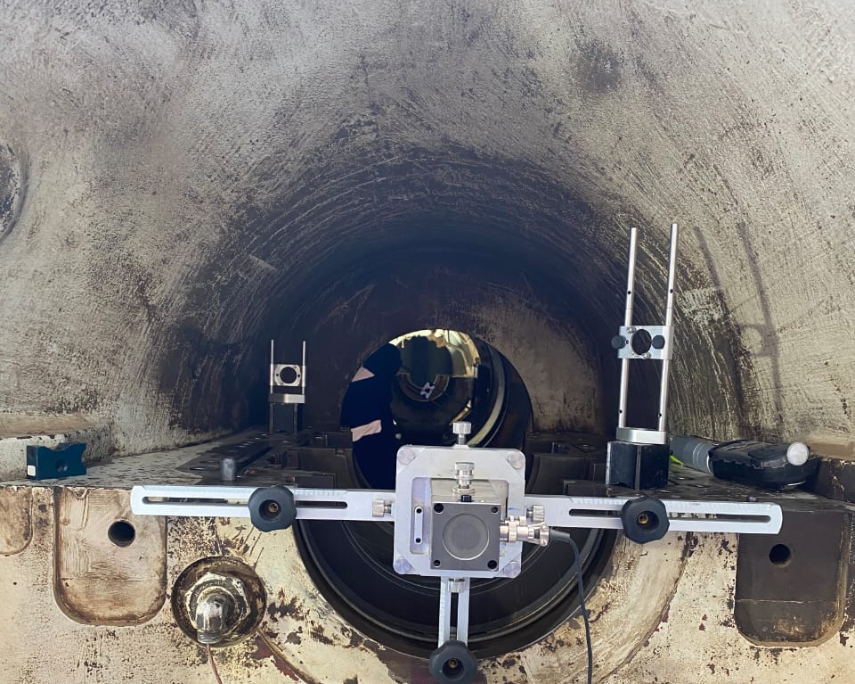
A Sensor Suitable for Industrial Use Is Not Automatically Suitable for an Oil & Gas Hazardous Area. Predictive maintenance is rapidly moving toward continuous online monitoring.
Plants increasingly want permanent sensors for:
- Vibration
- Bearing condition
- Temperature
- Oil condition
- Wear particles
- Pressure
- Electrical condition
- Process parameters
But oil and gas installations create an additional engineering requirement. The sensor may be installed where flammable gas, vapour or mist could be present. In such locations, a technically excellent industrial sensor may still be completely unsuitable if its hazardous-area certification does not match the application.
Selecting condition-monitoring sensors for oil and gas therefore requires two different questions:
Can the sensor measure the parameter correctly?
and
Can the sensor be installed safely in the classified area?
Both must be answered.
What Is a Hazardous Area?
An explosive atmosphere can occur when a flammable substance mixes with air in a concentration capable of supporting ignition and flame propagation. The current EU ATEX framework defines a potentially explosive atmosphere based on local and operational conditions, while IECEx provides an international conformity-assessment system for equipment intended for explosive atmospheres.
Typical oil and gas locations requiring hazardous-area consideration include:
- Refineries
- Petrochemical plants
- Gas-processing plants
- Compressor stations
- Tank farms
- LNG facilities
- Oil production facilities
- Offshore installations
- Chemical plants
- Fuel handling areas
Understanding Zone 0, Zone 1 and Zone 2
For explosive gas atmospheres, areas are classified according to the likelihood and duration of the explosive atmosphere.
Zone 0
An explosive gas atmosphere is present continuously, for long periods or frequently.
Zone 1
An explosive atmosphere is likely to occur occasionally during normal operation.
Zone 2
An explosive atmosphere is not likely during normal operation and, if it occurs, is expected to persist only for a short period.
These definitions are reflected in recognised hazardous-area guidance and the IEC 60079 approach to area classification.
For combustible dust, the corresponding classifications are generally:
Zone 20 → Zone 21 → Zone 22
A maintenance engineer should never independently “guess” the zone from the appearance of the installation. The approved hazardous-area classification drawing or engineering documentation should be used.
ATEX and IECEx Are Related—but They Are Not Simply Two Names for the Same Certificate
The terms ATEX and IECEx are frequently used together. They are related to explosive-atmosphere safety but represent different frameworks.
ATEX
ATEX Directive 2014/34/EU addresses equipment and protective systems intended for use in potentially explosive atmospheres within the European regulatory framework.
IECEx
IECEx is an international certification system based on IEC and ISO standards relating to equipment and services used in explosive atmospheres. The IECEx system uses standards in the IEC 60079 family, including standards covering general equipment requirements, hazardous-area classification, installation, inspection and repair.
Many Middle East oil and gas projects specify IECEx, ATEX or both depending on company and project requirements.
The required certification should therefore be confirmed from the customer specification rather than assumed.
Zone Rating Alone Is Not Enough
A common mistake is to ask: “Is the sensor Zone 1 certified?” and stop there.
Equipment selection may also depend on factors such as:
- Gas group
- Temperature class
- Equipment Protection Level
- Type of protection
- Ambient temperature range
- Electrical parameters
- Installation method
- Barriers or isolators
- Cable glands
- Enclosure requirements
- Special conditions of use
Hazardous-area equipment selection must therefore consider the complete marking and certificate, not merely a marketing statement such as “explosion proof.”
Gas Groups Matter
Different gases have different ignition characteristics. Hydrogen, for example, can impose different equipment requirements from many common hydrocarbons. A refinery may therefore specify equipment suitable for a particular gas group.
The sensor’s Ex marking should be checked against the actual hazardous material classification.
A certificate suitable for one gas environment should not automatically be assumed suitable for another.
Temperature Class Matters
Electrical and electronic equipment can become an ignition source if its surface temperature becomes sufficiently high. Temperature classification therefore establishes limitations on equipment maximum surface temperature. Common gas temperature classes range from:
T1 to T6 with progressively lower permitted maximum equipment surface temperatures. Selection must consider the ignition characteristics of the substances present. Recognised hazardous-area guidance specifically identifies hazardous-area classification and temperature class/ignition temperature as key information when selecting equipment.
What Does “Intrinsically Safe” Mean?
Intrinsic safety is one method of explosion protection. Instead of attempting to contain an explosion inside a rugged enclosure, intrinsic-safety design limits electrical and thermal energy so that ignition cannot occur under the conditions defined by the relevant protection level.
This can be attractive for instrumentation because sensors may operate using relatively low electrical energy. However, an intrinsically safe installation should be considered as a system.
The complete loop may involve:
Sensor → Cable → Barrier/Isolator → Safe-Area Interface → Monitoring System
Certification, entity parameters and installation requirements must therefore be checked. Installing an intrinsically safe sensor incorrectly can invalidate the protection concept.
Wireless Does Not Mean Certification Is Unnecessary
Wireless monitoring is particularly attractive for oil and gas facilities because installing signal cables across existing plants can be expensive.
Wireless sensors can reduce:
- Cable runs
- Junction boxes
- Installation work
- Shutdown requirements
- I/O requirements
But the radio, battery/power system and electronics all form part of the equipment. A wireless sensor installed in a hazardous area must therefore still carry the appropriate Ex certification for its intended use.
Why Ex-Rated Wireless Vibration Monitoring Is Valuable
Many oil and gas facilities contain hundreds of semi-critical machines such as:
- Pumps
- Motors
- Fans
- Blowers
- Cooling-tower equipment
- Small compressors
- Gearboxes
Historically, these assets may have been inspected monthly or quarterly using portable vibration instruments. Wireless sensors can significantly increase measurement frequency. Instead of: One vibration measurement every month the reliability team may obtain: Multiple measurements every day depending on the monitoring configuration. This provides much greater visibility of developing conditions.
More Data Requires Better Diagnostics
Continuous and wireless sensors can generate enormous quantities of information.
This creates another problem: Who will analyse all of it?
This is where automated analysis and AI-based diagnostic technology can become useful. A modern condition-monitoring architecture can combine:
Ex-rated sensor
↓
Wireless or wired acquisition
↓
Local gateway
↓
On-premise or approved server architecture
↓
Automatic anomaly detection
↓
AI-assisted diagnostics
↓
Expert vibration analysis
↓
Maintenance action
For oil and gas customers with strict cybersecurity rules, system architecture and data ownership should be established during the design stage rather than after installation.
Ex-Rated Oil Condition Monitoring
Condition monitoring in hazardous areas is not limited to vibration. Lubricant sensors can provide critical information about:
- Wear particles
- Oil degradation
- Moisture
- Temperature
- Contamination
- Oil condition
For critical compressors, gearboxes and lubrication systems, online oil monitoring can provide information that vibration measurements cannot provide by themselves.
Examples include early evidence of:
Abnormal wear debris
Water ingress
Lubricant degradation
Contamination events
Where the sensor itself is installed in a hazardous area, the relevant Ex certification must again be verified for the exact installation.
VIBSpECTRUM can provide Ex-rated online monitoring solutions for selected oil and machinery-condition applications, with certification to be matched to the specific project and sensor model.
Why We Should Avoid the Phrase “All Our Sensors Are ATEX”
This may sound like a small wording issue, but it is technically important.
A manufacturer may have:
- One sensor certified for Zone 1
- Another certified only for Zone 2
- A non-Ex gateway located in a safe area
- A certified measurement probe connected through an appropriate barrier
- Different certificates for different configurations
Therefore procurement specifications should identify the exact model and certificate.
A strong RFQ should ask for:
- Manufacturer
- Model
- Certificate number
- Certification body
- Ex marking
- Zone suitability
- Gas group
- Temperature class
- Equipment protection level
- Ambient range
- Special conditions of use
This prevents unpleasant surprises during client approval.
The IEC 60079 Series
The IECEx system references the IEC 60079 family of standards for explosive atmospheres.
Examples include
- *IEC 60079-0* – General equipment requirements
- *IEC 60079-10-1* – Classification of explosive gas atmospheres
- *IEC 60079-10-2* – Classification of explosive dust atmospheres
- *IEC 60079-14* – Electrical installation design, selection and erection
- *IEC 60079-17* – Inspection and maintenance
- *IEC 60079-19* – Equipment repair, overhaul and reclamation
These are among the standards recognised within the IECEx framework.
Importantly, the latest IEC 60079-0 edition is now *IEC 60079-0:2026*, illustrating why hazardous-area specifications should always refer to applicable project requirements rather than relying on old generic datasheets.
Installation Is Just as Important as Certification
A correctly certified sensor can still become part of an incorrect installation.
Issues can include:
- Wrong cable gland
- Incorrect barrier
- Incorrect wiring
- Unapproved modification
- Inadequate earthing
- Incorrect enclosure entry
- Failure to follow special conditions
- Wrong ambient-temperature application
- Improper maintenance
Explosion protection therefore does not end when the sensor purchase order is placed. The installation must follow the approved engineering design, relevant standards and site procedures.
Why Oil & Gas Facilities Need a Different Condition-Monitoring Strategy
Oil and gas plants have several characteristics that make condition-monitoring architecture particularly demanding:
Hazardous Areas
Sensors may require specific Ex certification.
Criticality
Unexpected compressor, pump or turbine failures can significantly affect production.
Large Asset Population
Facilities can contain thousands of rotating machines.
Cybersecurity
Cloud-based architectures may be restricted.
Environmental Conditions
High ambient temperatures, humidity, dust, salt and outdoor exposure may affect sensor selection.
Long Plant Life
Monitoring systems need to remain maintainable for many years.
The best solution therefore cannot simply be selected from a generic catalogue. It should be engineered around the plant.
A Multi-Technology Approach
For a critical oil and gas machine, condition monitoring may combine:
- Vibration
- Mechanical condition
- Ultrasound
- Friction, lubrication and selected leak/valve conditions
- Oil Monitoring
- Wear, contamination and lubricant condition
- Temperature
- Thermal condition
- Process Parameters
- Pressure, flow, speed and load
- Electrical Monitoring
- Motor and switchgear condition
Combining these parameters produces much greater diagnostic confidence than relying on one sensor technology alone.
VIBSpECTRUM’s Hazardous-Area Condition Monitoring Approach
VIBSpECTRUM provides condition-monitoring and predictive-maintenance technologies for oil, gas, petrochemical, power and other industrial facilities across the Middle East.
Depending on the application, solutions can include:
- Ex-rated vibration sensors
- Ex-rated wireless machinery monitoring
- Online vibration systems
- Ex-rated oil-condition/wear monitoring for selected applications
- Portable vibration analysis
- Online wear-particle monitoring
- Oil-condition monitoring
- Ultrasound inspection
- Thermography
- AI-assisted machinery diagnostics
- On-premise monitoring architectures
- Integration with plant monitoring systems
- Reliability engineering and diagnostics
Every hazardous-area project should be engineered around the specific area classification and approved certification requirements.
VIBSpECTRUM therefore recommends confirming the exact Ex certificate and marking for each selected sensor rather than relying on generic statements about hazardous-area suitability.
Frequently Asked Questions
What is an Ex-rated condition-monitoring sensor?
It is equipment designed and certified for use under specified conditions in potentially explosive atmospheres.
What is the difference between Zone 0, Zone 1 and Zone 2?
The zones reflect the likelihood and duration of an explosive gas atmosphere: continuous/frequent for Zone 0, occasional during normal operation for Zone 1, and unlikely or short-duration occurrence for Zone 2.
Is ATEX the same as IECEx?
No. ATEX is an EU regulatory framework, while IECEx is an international conformity-assessment system based on relevant IEC/ISO standards. They are related but should not be treated as interchangeable certificates.
Can wireless vibration sensors be used in hazardous areas?
Yes, provided the specific sensor and installation carry the appropriate certification for the intended hazardous area.
Are Ex-rated oil sensors available?
Yes, selected online oil-condition and wear-monitoring technologies can be supplied for hazardous-area applications. The exact certification should always be confirmed for the proposed model and installation.
Is Zone 0 certification automatically better than Zone 1?
A higher protection level may permit use in more demanding zones, but equipment should be selected against the actual area classification, gas group, temperature class, environmental and project requirements rather than simply specifying the highest certification available.
Can the monitoring system be on-premise?
Depending on the selected technology, condition-monitoring architectures can be designed for local/on-premise deployment where customer cybersecurity requirements prohibit external cloud hosting.